
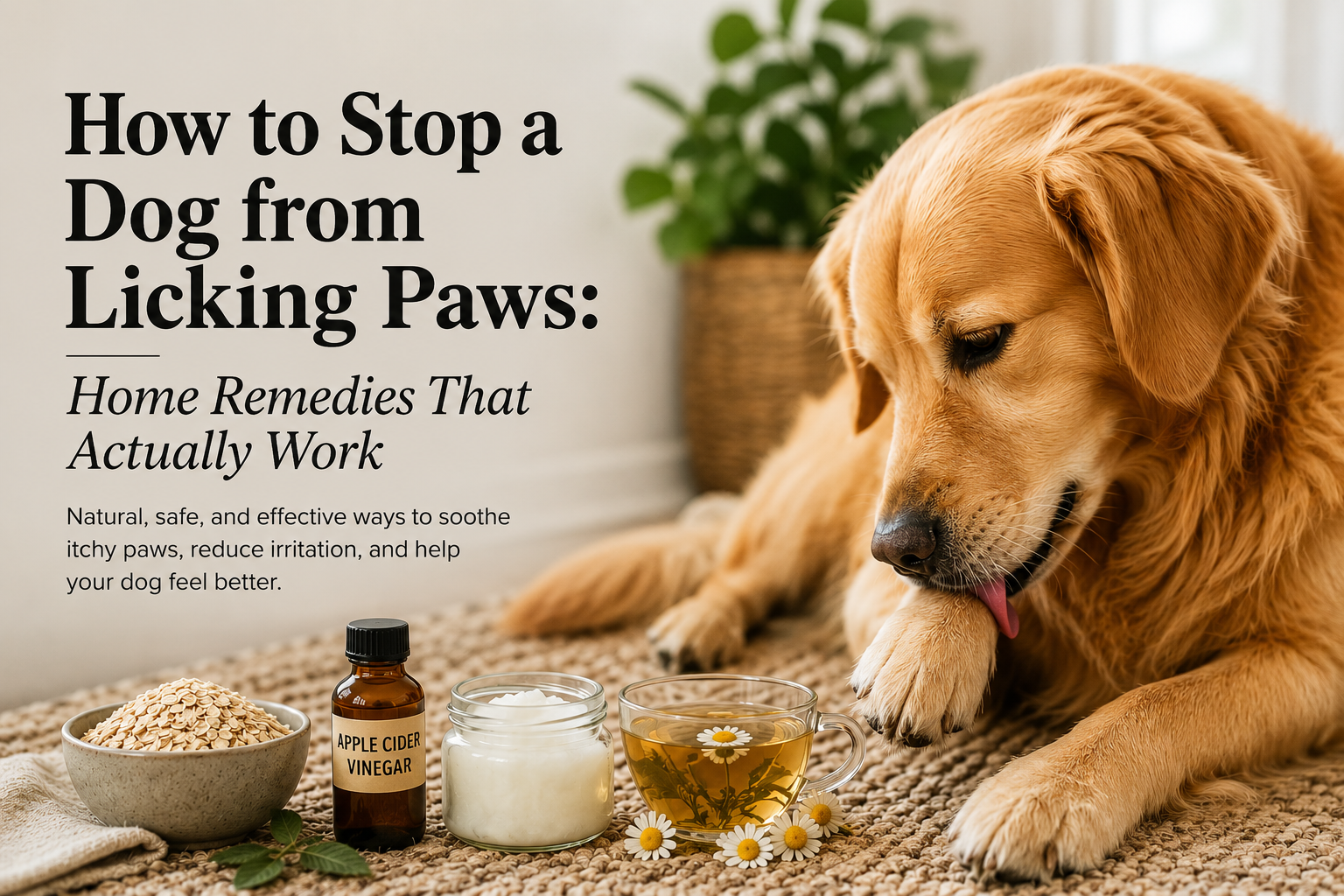
How to Stop a Dog from Licking Paws: Home Remedies That Actually Work
You hear it before you see it. That rhythmic, wet slurping sound coming from your dog’s corner of the room, again. You look over, and sure enough, they’re going at their paw like it owes them money. If this is a daily occurrence in your house, you’re not imagining things and you’re not alone.
Some paw licking is completely normal. Dogs clean themselves, scratch minor irritations, and occasionally lick out of habit. The problem is when it becomes relentless. Constant paw licking can cause more damage than whatever prompted it in the first place, turning a mild itch into raw, infected skin.
The key to fixing it isn’t just picking a remedy and hoping for the best. It’s figuring out what’s driving the licking and matching your approach to that cause. This guide walks through both: how to identify the problem, and the seven most reliable home remedies to stop it.
Quick Answer: Inspect your dog’s paws first. Then match the remedy to the cause: oatmeal soaks for allergies and dry skin, diluted apple cider vinegar for yeast, coconut oil for cracked pads, chamomile tea for inflammation. Always dry paws thoroughly after any soak.
Normal Paw Licking vs. a Problem Worth Solving
Dogs lick their paws the same way people crack their knuckles. Occasional licking, especially after a walk or before sleep, is a grooming behavior with no underlying cause. You don’t need to do anything about it.
Excessive paw licking looks different. Watch for these signs that something is wrong:
Licking one specific paw rather than all four (suggests injury, foreign object, or localized infection)
Red, swollen, or darkly stained fur between the toes (a rust-brown stain on light fur is a telltale sign of chronic licking)
A sour, musty, or yeasty smell coming from the paws
Limping, flinching when paws are touched, or favoring one leg
Hair loss or raw, weeping skin on the paw pads or between toes
Licking that resumes immediately after you redirect or distract your dog
Step 1: Inspect the Paw Before Trying Any Remedy
Applying a remedy to a paw you haven’t examined first is guesswork. Two minutes of inspection can tell you most of what you need to know and prevent you from making things worse (for example, apple cider vinegar on an open wound will sting and irritate already-damaged skin).
What to check:
Pads: Look for cuts, cracks, blisters, or embedded debris like glass, thorns, or grit.
Between the toes: Check the webbing for redness, swelling, or dark discharge. This is where yeast infections most commonly appear.
Nail beds: Torn or infected nails cause significant pain and prompt localized licking.
Smell: A corn-chip or musty odor usually signals a yeast infection. A sharply unpleasant smell may indicate bacterial infection.
Heat: Run your hand over the paw. Warmth compared to the other paws indicates inflammation or infection.
Important: If you find an open wound, bleeding, deep redness, or obvious swelling, skip home remedies and call your vet. Home remedies are for mild to moderate issues, not active infections that have already progressed.
Common Reasons Dogs Lick Their Paws
Most excessive paw licking comes down to one of these six causes. Getting this right is what determines which remedy will actually help.
Allergies
Allergies are the single most common cause of chronic paw licking in dogs. Environmental allergens, like grass pollen, mold, dust mites, and outdoor chemicals, collect on paw pads during walks and cause localized itching. Food allergies (commonly beef, chicken, dairy, or wheat) can also trigger widespread itching that concentrates in the paws.
Yeast or Bacterial Infection
Constant licking creates a warm, moist environment between the toes, which is ideal for yeast and bacteria to thrive. Infections can start as a secondary response to allergies and then become a problem of their own. The rust-brown staining on light-colored fur is caused by porphyrins in saliva, and it’s one of the clearest indicators that licking has been going on for a while.
Injury or Foreign Object
Cuts, splinters, bee stings, cracked pads, and embedded grit all cause immediate, focused licking of one paw. If your dog is suddenly licking one paw intensely, start here. Check carefully for anything lodged between the pads.
Dry or Cracked Paw Pads
Hot pavement, cold and dry air, and rough terrain can all dry out paw pads. Dry pads crack, crack edges catch and irritate, and your dog licks to soothe the discomfort. This is especially common in winter and midsummer.
Anxiety or Boredom
Dogs self-soothe through repetitive behaviors, and licking is one of the most common. A dog that’s anxious, under-stimulated, or experiencing changes in routine may lick their paws with no physical cause at all. If the paws look normal on inspection, this is likely what you’re dealing with.
Pain Elsewhere in the Body
Dogs sometimes lick their paws as a response to pain that has nothing to do with the paws themselves. Arthritis, hip dysplasia, and internal discomfort can all trigger this behavior, particularly in older dogs. If all other causes seem ruled out and licking persists, a full vet exam is warranted.
Quick Reference: Cause-to-Remedy Map
Use this table to match what you observed during your paw inspection to the most appropriate home remedy.
| Cause of Licking | Best Home Remedy | What to Avoid |
| Environmental allergies | Paw wipe + oatmeal soak | Leaving paws wet after wash |
| Yeast overgrowth | Diluted ACV soak | ACV on broken or raw skin |
| Dry / cracked pads | Coconut oil or paw balm | Over-soaking (dries pads further) |
| Mild irritation / itch | Baking soda soak or paste | Using on open wounds |
| Inflammation / redness | Chamomile tea soak | Hot water (use cool tea) |
| Anxiety or boredom | Enrichment + behavior redirect | Punishing the licking behavior |
| Possible infection | Iodine rinse (diluted) + vet check | Waiting more than 48–72 hrs |
7 Home Remedies to Stop Dog from Licking Paws
1. Oatmeal Soak (Best for: Allergies, General Itching, Dry Skin)
Oatmeal has natural anti-inflammatory compounds and oils that moisturize dry pads and reduce the itch response. It’s one of the gentlest remedies available and safe even if your dog licks their paws after treatment.
What you need: Plain, unflavored oats (old-fashioned or instant, no sweeteners); warm water; a shallow basin.
Grind half a cup of oats into a fine powder in a blender or food processor. The powder should look like pale flour.
Add the oat powder to a basin of warm (not hot) water. Stir until the water looks slightly milky.
Place your dog’s paws in the soak and encourage them to stay for 10 minutes. Treats help.
Rinse the paws lightly with clean water, then pat completely dry with a clean towel. Do not leave them damp.
Repeat once or twice daily until licking decreases. Most dogs show improvement within two to three days.
Pro tip: Thoroughly drying paws after any water-based soak is not optional. Trapped moisture between toes is one of the leading causes of secondary yeast infections.
2. Diluted Apple Cider Vinegar Soak or Spray (Best for: Yeast Overgrowth, Minor Bacterial Irritation)
Apple cider vinegar’s mild acidity disrupts the environment that yeast and bacteria need to thrive. It can also help restore the skin’s natural pH after it’s been disturbed by excessive licking. Use the raw, unfiltered type with the ‘mother’ for best results.
What you need: Raw apple cider vinegar; water; a spray bottle or shallow basin.
As a soak: Mix equal parts ACV and water. Soak the paws for 5 to 10 minutes, then rinse well and dry completely.
As a spray: Mix one part ACV with three parts water in a spray bottle. Spritz onto paws and allow to air dry. Skip the rinse for the spray version.
Important: Never apply ACV to open wounds, raw skin, or areas that are already inflamed and broken. The acidity will sting and worsen damaged tissue. Check paws before every application.
3. Coconut Oil (Best for: Dry and Cracked Pads, Minor Irritation)
Coconut oil moisturizes and softens cracked pads while its natural antimicrobial properties provide mild surface protection. Unlike many topical treatments, it’s completely safe if licked, which makes it practical for dogs who won’t cooperate with barriers.
What you need: Organic, unrefined coconut oil (solid at room temperature).
Warm a small amount of coconut oil between your palms until it melts.
Massage it gently into clean, dry paw pads, paying attention to any cracked or rough areas.
Allow it to absorb for 20 to 30 minutes. Put on dog socks or booties if possible to maximize contact time and prevent your dog from immediately licking it off.
Apply once daily, ideally before bedtime. You’ll typically see pads softening within a few days.
4. Baking Soda Soak or Paste (Best for: Mild Itch and Inflammation, Allergen Removal)
Baking soda is alkaline and helps neutralize mild irritants on the skin surface. A quick dip after outdoor walks can remove contact allergens before they trigger itching.
Soak: Add half a cup of baking soda to a gallon of warm water. Soak paws for 10 minutes, rinse well, and dry completely.
Paste: Mix baking soda and water in equal parts to form a thick paste. Apply to the irritated area, leave for 20 minutes, then rinse off completely.
Note: Baking soda should not be used on open wounds or broken skin. Also, don’t leave the paste on too long — more than 30 minutes can dry and irritate the skin further.
5. Chamomile Tea Soak (Best for: Redness, Mild Inflammation, Sensitive Skin)
Chamomile has natural anti-inflammatory and calming properties that make it one of the gentlest options for visibly red or irritated paws. It’s particularly useful for dogs with sensitive skin who react to stronger remedies.
Brew two to three chamomile tea bags in a quart of water for five minutes.
Allow the tea to cool completely to room temperature. Never use it warm, as heat can worsen inflammation.
Soak the paws in the cooled tea for five to ten minutes.
Pat dry. Chamomile tea is safe if ingested, so no rinse is required.
6. Diluted Iodine Rinse (Best for: Surface Disinfection, Possible Minor Infection)
A diluted povidone-iodine (Betadine) rinse is one of the most effective at-home disinfecting options available. It kills surface bacteria and yeast, is non-toxic if licked, and is inexpensive. Use this when you suspect a mild infection but don’t yet have signs that require a vet visit.
What you need: Povidone-iodine solution (available at pharmacies); water.
Add enough iodine to a basin of warm water to turn it the color of iced tea. That’s the correct dilution. Darker means too concentrated.
Soak paws for 30 to 60 seconds, then allow to air dry. Do not rinse off.
Important: This is a surface disinfectant, not a treatment for established infections. If you see pus, deep redness between the toes, or your dog is limping, a vet visit is needed, not a home soak.
7. Behavioral Enrichment and Redirect (Best for: Anxiety and Boredom-Driven Licking)
If your paw inspection found nothing wrong and the licking happens mostly when your dog is idle or stressed, the issue is behavioral. Physical remedies won’t help because there’s no physical problem to treat.
Increase daily exercise: Even 15 to 20 extra minutes of walking or active play can significantly reduce anxious behaviors.
Add mental stimulation: Puzzle feeders, sniff walks (where the dog controls the pace and sniffs freely), and training sessions engage a dog’s mind in ways that reduce compulsive behaviors.
Use a ‘leave it’ cue: When you catch your dog licking, calmly redirect them to a chew toy or puzzle. Don’t scold — negative attention can reinforce the behavior.
Address environmental stressors: Changes in routine, new people, or noise triggers can all cause licking. A consistent daily schedule and a calm, designated rest space help anxious dogs settle.
A Simple Daily Paw Care Routine to Prevent Recurrence
Home remedies address symptoms. A daily routine prevents them from coming back. This takes about three minutes and requires nothing more than a cloth and something to dry with.
After every walk: Wipe paws with a damp cloth or unscented baby wipe to remove pollen, grass residue, road salt, and grit. Pay attention to the webbing between toes.
Dry completely: Follow every wipe or soak with thorough drying. Damp paws left to air-dry between toes are an invitation for yeast.
Weekly inspection: Once a week, go through the inspection checklist from Step 1 above. Catching a small crack or redness early prevents it from turning into something that needs a vet.
Trim fur and nails regularly: Long fur between toes traps moisture and debris. Overgrown nails change gait and put pressure on joints, which can cause pain-driven licking in older dogs.
How to Stop the Licking While the Paw Is Healing
Home remedies need time to work, and your dog licking the paw immediately after treatment undoes the effort. Physical barriers are sometimes necessary.
Dog socks or booties: Cover the treated paw and keep your dog from re-licking. Most dogs tolerate socks indoors once they’re used to them.
Soft E-collar (cone): More effective than booties for determined lickers. Soft fabric cones are better tolerated than rigid plastic for longer wear periods.
Bitter apple spray on the wrap (not the skin): If your dog is determined to get through their socks, a bitter deterrent spray on the outside of the sock discourages chewing. Never spray directly on the skin or wound.
Note: Barriers are temporary tools, not solutions. Use them while you work on the underlying cause. A dog kept in a cone indefinitely without addressing the cause will resume licking the moment it comes off.
When to Stop Home Remedies and See the Vet
Home remedies are appropriate for mild to moderate cases. These are the signs that a vet visit is the right next step, not another round of oatmeal soaks:
No improvement after 48 to 72 hours of consistent home treatment
Visible pus, discharge, or bleeding from the paw
Deep red or purple coloring between the toes that doesn’t improve
Swelling, heat, and a strong unpleasant smell (signs of bacterial infection)
Limping or reluctance to bear weight on the paw
Your dog is licking all four paws obsessively despite behavioral intervention (may indicate a systemic allergy or pain condition)
A lump, cyst, or growth visible on or between the pads
Conditions like bacterial or fungal infections, severe allergies, arthritis, and parasites all require prescription treatment. Home remedies can help manage discomfort while you wait for an appointment, but they won’t resolve an active infection or an underlying health issue.
Frequently Asked Questions
What is the fastest home remedy for a dog licking their paws?
A diluted apple cider vinegar soak or spray offers quick relief for yeast-related licking and takes less than five minutes to apply. For general itch and irritation, a baking soda soak works within one session for many dogs. That said, ‘fastest’ depends on the cause. A remedy matched to the wrong cause won’t help regardless of how quickly you apply it.
Is it safe to put apple cider vinegar on my dog’s paws?
Yes, when diluted and applied to intact skin. The correct dilution is equal parts ACV and water for a soak, or one part ACV to three parts water for a spray. Never use it on open wounds, raw skin, or visibly inflamed tissue. ACV is acidic and will sting and worsen already-damaged skin.
Why does my dog keep licking their paws even after I’ve treated them?
Several possibilities: the underlying cause hasn’t been addressed (treating symptoms without removing the allergen, for example, allows the itch to return), the remedy isn’t matched to the cause, or the licking has become a habitual behavior that persists even after the original discomfort has resolved. Behavioral licking sometimes requires enrichment and redirect training on top of physical treatment.
Can I use coconut oil every day on my dog’s paws?
Yes, daily application to paw pads is generally safe. Use a small amount, allow time for it to absorb, and protect the paw with a sock for 20 to 30 minutes if possible. Coconut oil is safe if ingested in moderate amounts, though very large quantities can cause loose stools. If your dog eats most of what you apply, the topical benefit is reduced.
How long does it take for home remedies to work?
Most dogs show noticeable improvement within two to three days of consistent treatment when the remedy is correctly matched to the cause. If you haven’t seen any change after 48 to 72 hours, reassess the cause, try a different remedy, or schedule a vet visit. Some causes, like food allergies or established infections, won’t respond to home treatment at all.
My dog only licks one paw. What does that mean?
Licking focused on a single paw most often points to a localized issue: a cut, splinter, torn nail, insect sting, or early-stage infection in that specific paw. Check it carefully for anything embedded in the pad or webbing. If you find a wound, clean it gently with diluted iodine, keep it dry, and monitor closely. If you find nothing but the licking continues, have the paw examined by a vet to rule out a growth or deeper injury.
Final Thoughts
Paw licking that won’t quit is almost always trying to tell you something. The dogs who get better fastest are the ones whose owners take five minutes to inspect the paw and identify the cause before reaching for a remedy.
Start with the inspection. Match the remedy to what you find. Dry the paws after every treatment and every walk. And watch for the signs that tell you a vet visit is the right call. Most cases of excessive paw licking resolve within a week or two of consistent, targeted care.

Abhishek Nale is a digital publisher, SEO strategist, and content creator behind the-daily.buzz. He writes and curates content across technology, business, finance, lifestyle, health, travel, and trending topics, with a focus on creating clear, practical, and engaging content for modern readers.